
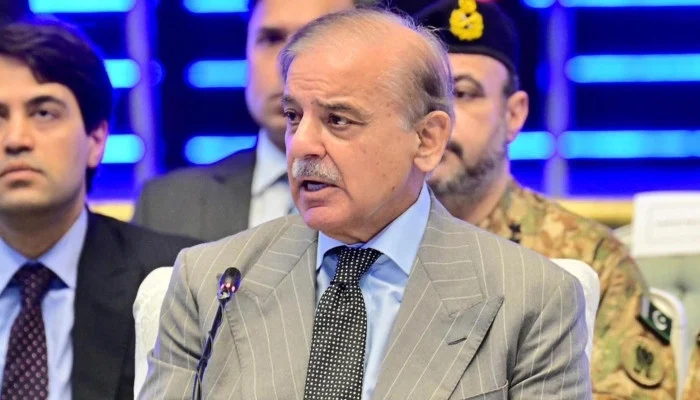
Sharif says Kabul has shown no serious commitment to curb militant groups
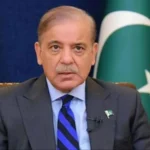
Prime Minister Shehbaz Sharif has issued one of his strongest statements yet on Pakistan’s deteriorating security environment, declaring that the Afghan authorities in Kabul have shown no serious commitment to curb militant groups operating from their territory. His remarks reflect growing frustration in Islamabad over continued cross-border militancy, particularly by the Tehreek-e-Taliban Pakistan (TTP), which Pakistan says is responsible for a surge in deadly attacks on civilians and security personnel.
The statement comes at a time when Pakistan is grappling with heightened internal security challenges, rising economic pressures, and delicate diplomatic balancing with its western neighbour. Analysts say Sharif’s comments signal a hardening of Pakistan’s position on Afghanistan, following years of diplomatic engagement that have yielded limited tangible results.
Pakistan’s Core Security Concern
At the heart of Pakistan’s complaint is the continued presence of armed militant groups inside Afghanistan, which Islamabad believes are operating with relative freedom. Pakistani officials have repeatedly stated that the TTP and allied groups use Afghan territory as a launchpad for attacks, retreating across the border after carrying out assaults.
Prime Minister Sharif emphasized that Pakistan has shared credible intelligence with Kabul on multiple occasions, identifying militant hideouts and leadership structures. Despite these efforts, he said, there has been no sustained or verifiable action by Afghan authorities to dismantle these networks.
For Pakistan, the issue is not merely diplomatic—it is existential. Over the past few years, militant violence has claimed the lives of hundreds of civilians and security personnel, destabilizing border regions and undermining public confidence in security institutions.
The TTP Factor
The Tehreek-e-Taliban Pakistan remains Pakistan’s most pressing internal security threat. Originally formed as a coalition of militant groups, the TTP has carried out high-profile attacks on schools, mosques, police stations, and military convoys.
Following the Taliban’s return to power in Afghanistan in 2021, Pakistan had hoped that shared ideological roots and historical ties would translate into cooperation against the TTP. Instead, Islamabad believes the opposite has occurred: TTP fighters have regrouped, reorganized, and expanded their operational reach.
Prime Minister Sharif noted that lasting peace in Pakistan is impossible unless militant sanctuaries across the border are dismantled. He stressed that no country can tolerate armed groups using a neighbouring state’s territory to wage violence.
Kabul’s Position and Denials
Afghan authorities, for their part, have rejected Pakistan’s accusations on multiple occasions. Officials in Kabul maintain that Afghan soil is not being used against any country and insist that security issues should be resolved through dialogue rather than blame.
Some Afghan officials have also argued that the TTP issue is Pakistan’s internal problem, suggesting political reconciliation rather than military pressure as a solution. This divergence in approach has widened the trust deficit between the two neighbours.
Observers note that Kabul faces its own challenges, including internal security issues, economic isolation, and limited international recognition. However, Pakistan argues that these constraints do not justify inaction against militant groups whose activities threaten regional stability.
Impact on Pakistan-Afghanistan Relations
Sharif’s remarks underline a broader deterioration in Pakistan-Afghanistan relations, which were once described by officials as fraternal and cooperative. Today, the relationship is marked by:
- Diplomatic mistrust
- Border tensions and sporadic clashes
- Disagreements over refugee management
- Trade disruptions and transit issues
Pakistan has repeatedly warned that unresolved security concerns could undermine regional connectivity projects, trade corridors, and economic integration efforts linking Central Asia to South Asia.
Regional and International Implications
The security situation between Pakistan and Afghanistan has implications far beyond the two countries.
Regional Stability
Persistent militancy threatens not only Pakistan but also China’s regional investments, Central Asian security, and broader counterterrorism efforts. Islamabad has stressed that unchecked militant networks could destabilize the wider region.
International Counterterrorism
Pakistan has urged the international community to engage Kabul responsibly and ensure that Afghanistan does not become a breeding ground for transnational militant groups. Islamabad maintains that ignoring the issue could repeat past mistakes that had global consequences.
Economic Consequences
Continued instability discourages foreign investment, disrupts cross-border trade, and complicates Pakistan’s already fragile economic recovery. Sharif has repeatedly linked security with development, stating that no economy can grow amid persistent violence.
Pakistan’s Diplomatic Efforts So Far
Despite public criticism, Pakistan has not abandoned diplomacy. Over the past few years, Islamabad has:
- Held bilateral security talks with Afghan officials
- Facilitated humanitarian assistance to Afghanistan
- Advocated international engagement to prevent Afghan economic collapse
However, Pakistani officials argue that goodwill gestures must be matched with concrete security measures.
Sharif’s statement suggests that patience in Islamabad may be wearing thin, as public pressure mounts for stronger action to protect lives inside Pakistan.
Public Sentiment Inside Pakistan
Within Pakistan, frustration is growing. Families of victims, security analysts, and political commentators increasingly question whether diplomatic restraint has delivered results.
Public discourse has shifted toward demands for:
- Stronger border controls
- More assertive diplomatic messaging
- Clear red lines on cross-border militancy
Sharif’s remarks appear to resonate with a population weary of recurring attacks and prolonged insecurity.
Challenges Ahead
While Pakistan’s position is clear, the path forward is complex.
Border Reality
The Pakistan-Afghanistan border is rugged and porous, making complete control difficult despite fencing and surveillance efforts.
Diplomatic Balancing
Pakistan must balance pressure on Kabul with the risk of further alienation, which could worsen security cooperation.
Regional Politics
Any escalation could draw in regional stakeholders, complicating an already fragile geopolitical landscape.
What Comes Next?
Analysts believe Pakistan may pursue a multi-pronged strategy, including:
- Increased diplomatic pressure
- Stronger border enforcement
- Greater international advocacy on militant sanctuaries
- Enhanced internal counterterrorism operations
Sharif has reiterated that Pakistan seeks peaceful relations with Afghanistan but insists that peace cannot come at the cost of national security.
Conclusion
Prime Minister Shehbaz Sharif’s statement that Kabul has shown no serious commitment to curb militant groups reflects Pakistan’s deepening concern over cross-border terrorism and its broader impact on peace, development, and regional stability.
The remarks signal a critical moment in Pakistan-Afghanistan relations, where continued dialogue must be matched with decisive action. Whether Kabul responds with tangible measures or the impasse deepens will shape not only bilateral ties but also the security trajectory of the entire region.
For Pakistan, the message is unequivocal: peace is possible, but only if militancy is confronted head-on.