

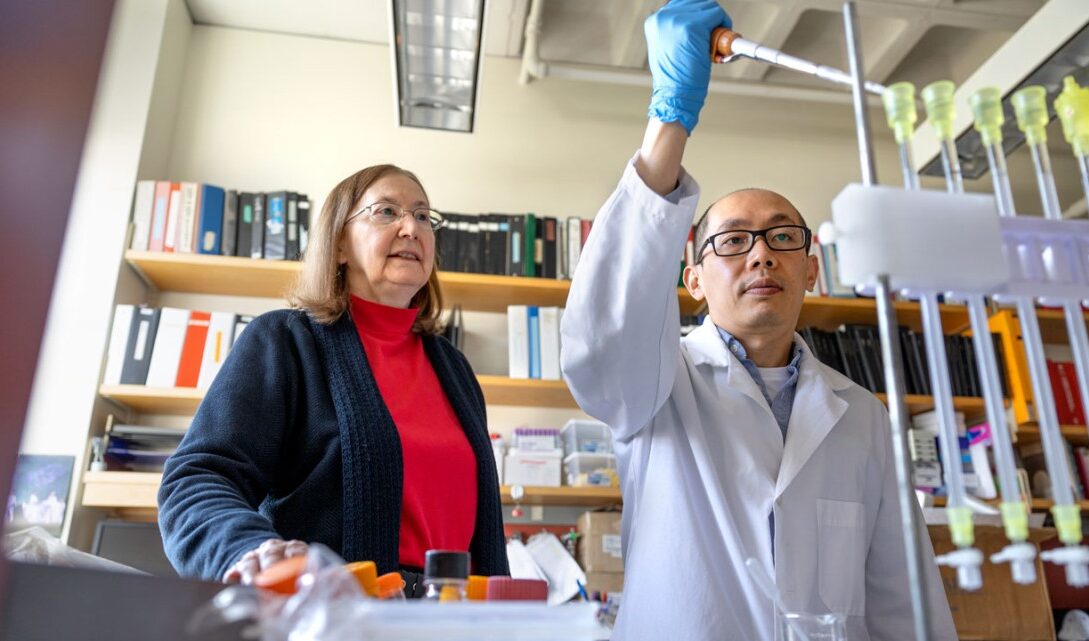
Scientists Resurrect Ancient Enzyme ,How did life function billions of years ago, when Earth was young, hostile, and dramatically different from today? This question has fascinated scientists for generations. In a groundbreaking achievement, scientists have resurrected an ancient enzyme—a molecular machine that once powered early life—to better understand how the first living systems survived, evolved, and laid the foundation for modern biology.
This remarkable scientific feat blends evolutionary biology, molecular genetics, and biochemistry. By recreating enzymes that existed billions of years ago, researchers are effectively turning back the molecular clock, offering unprecedented insights into the origins of life on Earth.
In this blog, we explore how scientists resurrect ancient enzymes, why this research matters, what it reveals about early life, and how it could shape the future of science and medicine.
What Does It Mean to “Scientists Resurrect Ancient Enzyme?
When scientists say they have “resurrected” an ancient enzyme, they don’t mean digging up fossilized proteins. Instead, they use a method called ancestral sequence reconstruction.
This process involves:
- Studying genetic sequences of modern organisms
- Comparing similarities and differences across species
- Using computational models to infer what ancient genes likely looked like
- Synthesizing those genes in the laboratory
- Expressing them in living cells to produce the ancient enzyme
The result is a functional protein that closely resembles enzymes used by early life forms billions of years ago.
Why Enzymes Are Key to Understanding Early Life
Enzymes are essential for life. They speed up chemical reactions that would otherwise take thousands of years. Without enzymes, metabolism, DNA replication, and energy production would be impossible.
Studying ancient enzymes helps scientists answer critical questions such as:
- How did early life survive extreme heat, acidity, and radiation?
- What chemical reactions powered primitive cells?
- How did modern enzymes evolve from simpler ancestors?
By resurrecting ancient enzymes, researchers gain a direct window into the biochemical world of early Earth.
What Scientists Learned from the Ancient Enzyme
Recent studies show that resurrected Scientists Resurrect Ancient Enzyme behave very differently from many modern ones.
Extreme Stability
Ancient enzymes are often more heat-resistant and chemically stable. This suggests early life evolved in harsh environments—possibly hot oceans, volcanic regions, or hydrothermal vents.
Broad Functionality
Unlike modern enzymes that are highly specialized, ancient enzymes tend to be less selective, meaning they could catalyze multiple reactions. This flexibility may have been crucial when early life had limited genetic resources.
Slower but Reliable Performance
While ancient enzymes may work more slowly, they are remarkably robust. This reliability likely helped early organisms survive fluctuating and dangerous conditions.
Reconstructing Early Earth Conditions
Resurrected enzymes also act as biological thermometers of the past.
Because enzyme stability depends on environmental conditions, scientists can infer:
- Ancient ocean temperatures
- Atmospheric composition
- Chemical availability
For example, enzymes that function optimally at high temperatures support the idea that early Earth was much warmer than today.
Implications for Evolutionary Biology
The discovery helps clarify how life evolved from simple chemical systems into complex organisms.
Key insights include:
- Evolution favors efficiency over time: Early enzymes were generalists, later evolving into specialists
- Protein complexity increased gradually
- Modern biology is built on ancient molecular frameworks
This research strengthens the theory that life evolved through incremental improvements rather than sudden leaps.
Relevance to Modern Science and Technology
The impact of resurrecting ancient enzymes goes far beyond understanding early life.
Biotechnology
Ancient enzymes’ stability makes them ideal for industrial applications such as:
- Biofuel production
- Chemical manufacturing
- Waste processing
Medicine
Studying primitive enzymes can inspire:
- More stable drug targets
- Better enzyme-based therapies
- Insights into disease-causing mutations
Astrobiology
Understanding how enzymes function in extreme environments helps scientists assess the possibility of life on:
- Mars
- Europa
- Enceladus
If life exists elsewhere, it may resemble Earth’s earliest organisms.
Ethical and Scientific Challenges
While exciting, this research comes with challenges:
- Accuracy limits: Reconstructed sequences are best estimates, not exact copies
- Laboratory conditions differ from ancient Earth
- Ethical considerations around recreating ancient biological systems
Despite these challenges, the scientific benefits far outweigh the risks.
What This Means for the Origin of Life Debate
Resurrecting ancient enzymes strengthens the idea that life began under extreme conditions and adapted through molecular resilience. It supports theories that:
- Life originated in hot, chemically rich environments
- Early metabolism preceded complex genetics
- Evolution is deeply rooted in biochemical survival strategies
These findings bring scientists closer to answering one of humanity’s oldest questions: How did life begin?
Future Research Directions
Scientists plan to:
- Reconstruct entire ancient metabolic pathways
- Study multiple ancient enzymes together
- Explore how early proteins interacted with primitive membranes
As technology advances, researchers may soon simulate entire ancient cells in the lab.
Conclusion
When scientists resurrect an ancient enzyme, they are doing more than reviving a protein—they are reviving a chapter of Earth’s earliest history. These molecular time travelers reveal how life survived its infancy, adapted to extreme environments, and evolved into the rich diversity we see today.
By bridging the gap between ancient biology and modern science, this research not only deepens our understanding of life’s origins but also opens new doors in medicine, biotechnology, and the search for life beyond Earth.