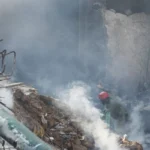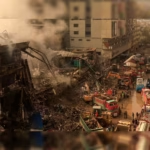

The catastrophic Gul Plaza fire in Karachi — which claimed dozens of lives and exposed gaping safety and governance issues — has not only triggered grief and rescue efforts but also ignited a fiery political feud between two major parties: the MQM and PPP Trade Fire Over Karachi Governance. What began as a national tragedy quickly spiralled into a high-stakes blame game over Karachi’s governance and administrative failures.
MQM-P’s Harsh Criticism and Federal Control Demands
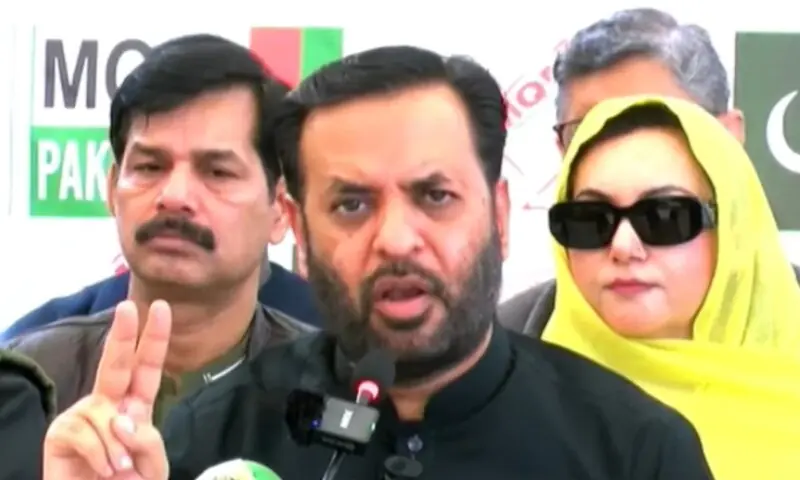
In the aftermath of the Gul Plaza inferno, MQM-P leader and Federal Health Minister Syed Mustafa Kamal did not shy away from blaming the Sindh government, led by the PPP, for what he described as years of chronic misgovernance and neglect. Speaking at a high-profile press conference in Karachi, Kamal lamented that Karachi — Pakistan’s largest and most economically vital city — has been “abandoned to tragedy.”
Kamal argued that the city’s governance structure is fundamentally flawed and incapable of protecting its citizens, especially in emergencies. To address this, he called for:
- Karachi to be declared a federal territory under Articles 148 and 149 of the Constitution, giving the federal government direct authority over the city’s administration.
- Recognition of Karachi as Pakistan’s economic and financial capital, warranting a governance model distinct from the provincial system.
- An end to what he termed “democratic terrorism” under the current provincial setup, alleging that the 18th Amendment has allowed misgovernance to flourish.
Kamal’s rhetoric tapped into long-standing frustrations among some Karachi residents who feel the city’s population, revenue contribution, and urban challenges have been overlooked by provincial authorities.
PPP’s Fierce Rebuttal
The Sindh government, led by the PPP, responded quickly and assertively to MQM-P’s accusations. Sindh Senior Minister Sharjeel Inam Memon rejected calls for federal takeover, accusing MQM-P of politicising the tragedy rather than focusing on rescue, relief, and reforms.
Memon questioned whether constitutional changes or federal oversight would have prevented the fire in the first place, emphasizing that:
- Gul Plaza was an incident like other tragedies before it, not a systemic attack on the city by the provincial government.
- MQM-P’s accusations and timing were politically motivated rather than aimed at constructive solutions.
- Governance remains a constitutional responsibility of the province, and blaming the PPP would not avert future disasters.
Memon also reminded critics of past violent incidents and historical controversies associated with rival parties, indirectly highlighting MQM’s own troubled political legacy.
National Assembly Showdown
The blame game was not limited to party press conferences. In a heated session of the National Assembly, lawmakers from MQM-P and allied parties called for urgent reforms to local government structures and stronger disaster governance frameworks, while PPP members pushed back against what they saw as political exploitation of the tragedy.
The debate underscored broader national concerns about urban governance, emergency preparedness, and devolution of powers — not just criticism of specific actors. Defence Minister Khawaja Asif echoed calls for empowered local bodies, arguing that Karachi’s sheer size and complexity demand a more robust administrative model.
Deeper Fault Lines in Karachi Politics
The clash between MQM-P and PPP over governance is rooted in deeper historical fault lines:
- Karachi has been a political battleground for decades, with both parties vying for influence over the city’s administration and resources.
- MQM’s calls for federal intervention reflect longstanding demands for greater autonomy or direct federal oversight for Sindh’s largest metropolis.
- PPP, on the other hand, defends the provincial governance structure established under the 18th Constitutional Amendment, arguing that constitutional autonomy must be respected.
Public sentiment — as reflected in online reactions — highlights widespread frustration with both parties, with many Karachiites arguing that neither MQM nor PPP has delivered effective governance, leaving the city vulnerable to tragedies and structural neglect.
Why This Political Clash Matters
The debate over governance following the Gul Plaza fire goes beyond partisan squabbles and touches fundamental questions about:
1. Local vs Provincial vs Federal Authority
At what level should responsibility lie for managing a city as large and economically critical as Karachi?
2. Disaster Preparedness and Urban Management
Who is accountable for enforcing safety standards, building codes, and emergency response mechanisms that could prevent tragedies like Gul Plaza?
3. Constitutional Interpretation
The ongoing debate over the 18th Amendment and the potential use of Articles 148 and 149 highlights how constitutional frameworks can shape — or hinder — effective city management in times of crisis.
A City Caught in the Crossfire
While politicians trade barbs, many Karachi residents feel caught between political posturing and everyday governance failures. Discussions on social platforms reflect deep disillusionment with all major parties, as citizens demand not just blame but meaningful action to upgrade infrastructure, safety systems, and local services.
Conclusion
The Gul Plaza tragedy has laid bare not only lapses in emergency response and urban safety but also the political fault lines that shape Karachi’s governance landscape. As MQM-P pushes for federal administration and PPP defends provincial authority, the debate underscores a broader struggle over accountability, constitutional governance, and leadership in Pakistan’s largest city.
Whether this political exchange results in substantive reforms or remains another episode of blame-shifting will significantly influence Karachi’s future — and the lives of its millions of residents. Governing the city effectively, many argue, requires pragmatic solutions beyond political rhetoric.