
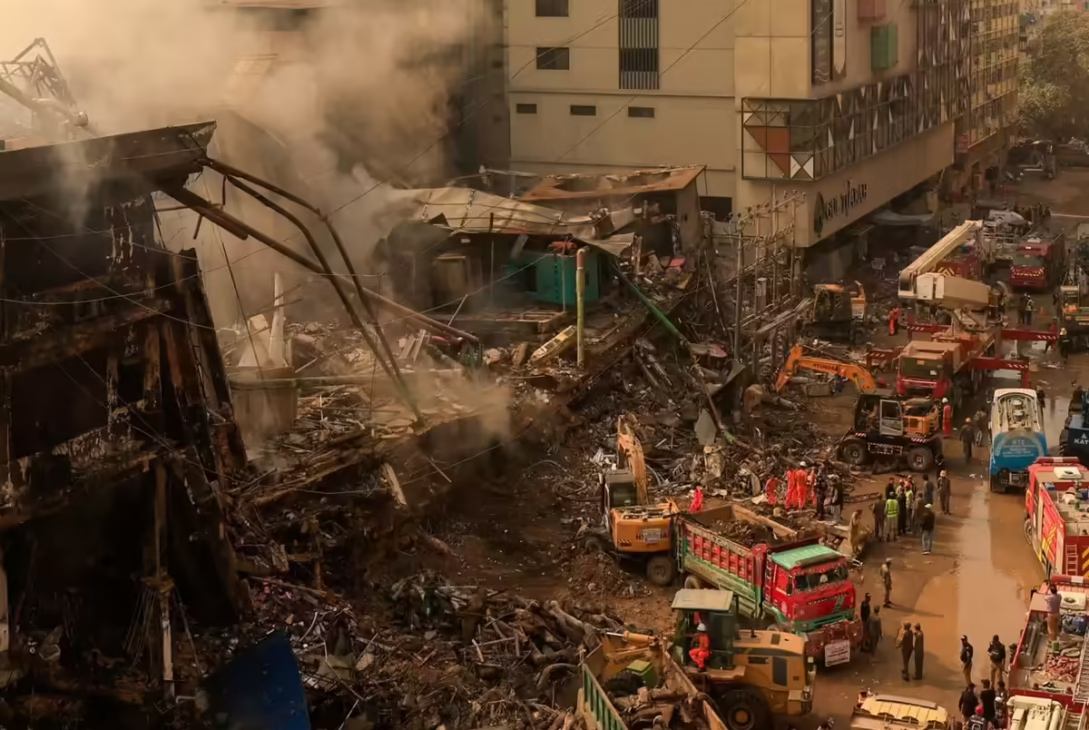
In the early hours of January 18, 2026, a devastating fire erupted at Gul Plaza, a bustling shopping mall on Muhammad Ali Jinnah Road in Karachi, Sindh, Pakistan. What began as a fire in one shop quickly turned into one of the deadliest urban fires the city has seen in years, exposing grave concerns about fire safety, building regulations, emergency response, and urban governance.
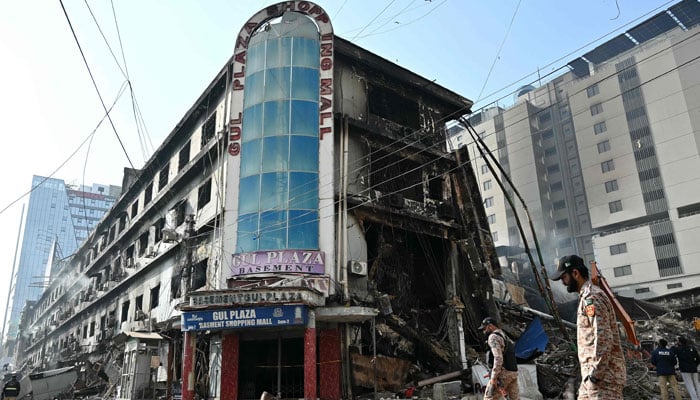
The Gul Plaza incident is a tragedy that has deeply affected Karachi’s families, shopkeepers, emergency responders, and the broader public. With over 60 lives lost, countless injuries, and massive economic destruction, the fire has highlighted not just an isolated disaster — but a systemic challenge in building safety and urban governance in Pakistan.
What Happened That Night
The blaze broke out at approximately 10:15 pm in a multistory commercial complex packed with shops selling clothing, crockery, electronics, cosmetics, and other goods. Within minutes, the fire spread rapidly through the building’s floors and basement — intensified by the presence of highly flammable merchandise and poor ventilation.
Firefighters battled the inferno for more than 24 hours, with units deployed from across the city. Rain-like smoke swept through narrow corridors and stairways, complicating rescue efforts as people inside became trapped.
Human Toll: Casualties, Missing and Mourning
As of the latest consolidated figures, the death toll continues to rise as rescue teams recover more remains from under the rubble:
- Officials confirmed over 60 deaths, with the total climbing rapidly as operations continued.
- At least 83 people remain missing, with families anxiously awaiting news.
- Bodies recovered from a single shop on the mezzanine floor accounted for many of the rising fatalities.
- DNA testing has been initiated to identify victims whose remains were severely burned.
The sheer scale of loss has left families in grief and uncertainty, with loved ones still unaccounted for days after the blaze began.
Rescue and Recovery Efforts
Rescue teams from Rescue 1122, fire services, and paramilitary units continued exhaustive search and recovery operations through unstable debris and smoke. At times, portions of the building collapsed or remained unsafe, forcing cautious progress.
Authorities described clearing the first floor and moving systematically to upper levels, all while battling structural instability and lingering heat pockets.
Cause and Initial Investigations
While an exact cause is yet to be officially declared, early investigations and eyewitness accounts suggest:
- The fire may have originated from a short circuit or malfunctioning electrical equipment in a ground‑floor shop.
- Flammable stock — including clothes, plastics, and household goods — accelerated the blaze.
- Lack of fire safety systems — such as emergency exit lighting, sprinklers, and clear evacuation routes — severely hampered escape and rescue.
These early assessments underscore a broader theme: the disaster was fuelled not just by fire, but by systemic safety and regulatory failures.
Safety Failures and Regulatory Oversight
Analyses by local media and civil society indicate that Gul Plaza lacked many of the fundamental features required for fire safety:
- Inadequate emergency lighting — officials acknowledged that evacuation guidance was severely limited.
- Narrow stairways and congested floors made evacuation difficult even before the fire intensified.
- Official building plans reportedly allowed fewer shops than were actually operating, hinting at overcrowding and potential regulatory laxity.
Experts and analysts pointed to poor enforcement of safety regulations and urban governance weaknesses as factors that turned an accident into a mass casualty event.
Economic and Social Impact
The economic fallout has been profound:
- Gul Plaza was home to around 1,200 shops and thousands of livelihoods.
- Local trader groups estimated billions of rupees in losses from inventory, infrastructure damage, and business disruption.
- Many traders were reportedly operating without formal insurance, meaning losses may not be recoverable.
Communities have rallied to support affected families and shop owners — from online platforms offering zero‑commission sales opportunities to grassroots efforts to help businesses stay afloat digitally.
Government Response and Rehabilitation Plans
Sindh authorities have taken several steps in the aftermath:
- Relief and compensation: The provincial government announced financial aid packages and Rs10 million in compensation for the families of victims.
- Rehabilitation: Plans to rebuild Gul Plaza and provide support to affected traders were announced by the Sindh Chief Minister.
- Inquiry and accountability: A high‑level inquiry committee has been formed to investigate the incident and assess safety compliance.
Officials pledged to improve enforcement of safety standards across similar commercial buildings, but the path from commitment to implementation remains long and complex.
Public Reaction and Calls for Change
The tragedy has sparked widespread public debate:
- Citizens and commentators have criticized both government response delays and inadequate safety oversight.
- Many have pointed out that similar incidents in the past — including mall and industrial fires — showed a pattern of systemic negligence.
- Community voices on social platforms underscored frustration about lack of preparedness and minimal safety culture in commercial spaces.
Lessons and the Road Ahead
The Gul Plaza incident is more than a tragic fire — it is a wake‑up call on urban safety management:
1. Strengthen Safety Regulations
There is an urgent need to enforce fire exits, alarm systems, sprinklers, and evacuation plans in buildings of all sizes.
2. Improve Emergency Response
Faster, better‑equipped firefighting and rescue capabilities could significantly reduce casualties in future emergencies.
3. Regular Audits and Compliance
Mandatory safety certification and routine compliance checks must be institutionalized across urban commercial zones.
4. Community Awareness
Shop owners and occupants must be educated on fire risks, evacuation best practices, and the importance of basic safety infrastructure.
Conclusion
The Gul Plaza incident is a tragedy that has deeply affected Karachi’s families, shopkeepers, emergency responders, and the broader public. With over 60 lives lost, countless injuries, and massive economic destruction, the fire has highlighted not just an isolated disaster — but a systemic challenge in building safety and urban governance in Pakistan.
As rescue and recovery continue, the nation watches and mourns, even as calls grow louder for meaningful reforms that can prevent such heartbreak from happening again.